
Better performance
Measure slow operations and address the causes that matter to users.
Software modernisation
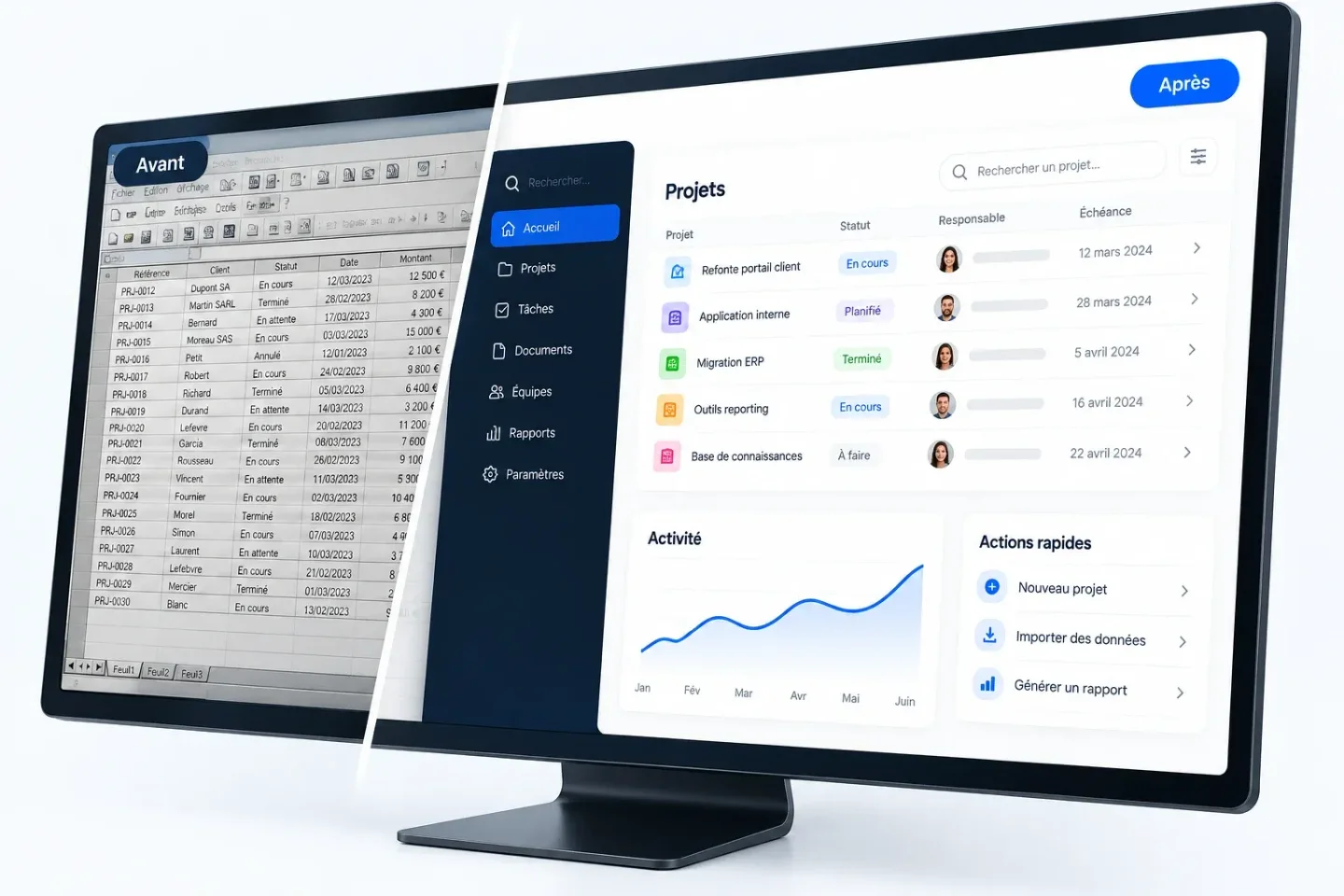
An ageing application may still contain valuable workflows and data. We examine it before proposing gradual improvements, a targeted rebuild or a planned migration.
Why modernise?
The aim is a more usable and maintainable application. The right changes depend on the condition of the software and the risks of transition.
Measure slow operations and address the causes that matter to users.
Review dependencies, access and maintenance requirements.
Improve the interface around the tasks people need to complete.
Reduce technical constraints that make useful improvements difficult.
Applications we examine
Business applications, internal tools, portals and specialist systems need an approach that respects their environment.
Rules and workflows accumulated through years of use.
Operational applications used by your teams.
Shared information and requests outside the organisation.
Applications linked to your current infrastructure.
Systems whose support or dependencies need attention.
Software that requires a careful code and dependency review.
A controlled transition
We assess technical constraints, business continuity and the resources available for the transition.
Examine the code, data, dependencies, access and daily usage.
Compare gradual improvement, targeted replacement and migration.
Work in stages, test representative journeys and prepare data checks.
Agree deployment, fallback and communication responsibilities.
Monitor the result and prioritise further improvements.
Preserving what matters
We identify what must be retained, how it will be transformed and how its integrity will be checked.
A changeover may require a maintenance window, parallel operation or staged migration. We document the chosen approach and its limits. Continuity should be tested and planned, not promised without evidence.
Technology choices
We choose technology around usage, integrations and maintenance. The aim is software that can be understood, operated and improved.
Frequently asked questions
Practical questions to discuss before development begins.
No. The review may identify a small number of changes that remove the main constraints. A replacement is justified only when the alternatives do not meet the need.
We examine formats, quality and dependencies, then agree migration and verification steps. Access to the source system is necessary.
The approach depends on the application. We plan maintenance windows, staged migration or parallel operation where appropriate.
Maintenance responsibilities and service expectations are agreed once the application and its dependencies have been reviewed.

Have a project in mind?
Tell us how your organisation works, what is getting in the way and what you would like to make possible. We will identify a useful next step together.